
I didn’t start meditating because I wanted to become more mindful or because meditation was something I thought I should add to my morning routine.
I started because I was struggling.
Around 2013 or 2014, my life began to change in ways I hadn’t expected. One difficult situation was followed by another, and some of what happened during those years went far beyond the ordinary ups and downs of life.
There were times when I felt as though I was drowning and desperately looking for something -anything- I could hold on to.
I was also dealing with a lot of fear. My mind could take one worry and run with it, turning it over and over until it felt enormous.
Somewhere in the middle of all of that, I found meditation.
It certainly didn’t make my problems disappear. And I didn’t suddenly become a calm person who could sit peacefully for twenty minutes without a thought entering her mind.
But little by little, meditation gave me something I desperately needed at the time: a way to come back to the present moment when my thoughts and fears were pulling me somewhere else.
More than twelve years later, I still turn to meditation when life suddenly throws another difficult situation at me. But it has also become something I try to carry into ordinary, everyday life.
For me, meditation isn’t only about sitting quietly with my eyes closed. It has taught me to pause when emotions take over, to turn inward for a moment, and to notice what is actually happening inside me before I react.
I don’t always manage it, of course. But that small pause can make a real difference in how I deal with difficult emotions.
And after all these years, meditation still doesn’t work perfectly every time.
Nighttime is probably the hardest for me. When I can’t sleep because something is worrying me and my mind keeps going over the same thoughts again and again, finding that peaceful place through meditation can be surprisingly difficult.
Most of the time, meditation helps me settle my mind. But there are still nights when my thoughts simply don’t want to cooperate.
I used to think that meant I wasn’t doing it right.
Today, I see it differently.
Meditation hasn’t taught me how to switch off every difficult thought or emotion. It has taught me how to notice them, how to come back to myself, and sometimes to simply accept that my mind is having a difficult moment.
And perhaps that is one of the most important things I’ve learned from meditation: the goal isn’t to become perfectly calm. It’s learning how to find your way back to yourself, again and again.
What Meditation Means to Me Today
When people hear the word meditation, they often imagine someone sitting cross-legged in complete silence, eyes closed, hands resting perfectly on their knees.
That really isn’t me.
I rarely meditate sitting cross-legged in what we tend to think of as a traditional meditation pose. Sitting that way isn’t particularly comfortable for me, and over the years I’ve realized that it simply isn’t necessary.
I often meditate wherever I happen to be, sometimes for only a few minutes.
What matters to me is not how I’m sitting, but where I’m placing my attention.
Meditation has become less about creating the perfect conditions and more about giving myself a moment to stop.
Sometimes that means focusing on my breathing. Sometimes it means noticing what is happening inside me instead of immediately reacting to it. And sometimes it simply means giving my mind a few minutes to settle.
When Meditation Becomes Mindfulness
Something else has happened over the years: meditation has found its way into my everyday life through mindfulness.
When I’m walking my dogs in the woods, for example, I sometimes deliberately stop.
Instead of simply walking on while my mind races through everything I still have to do, I take a moment to really notice where I am.
I look at the trees and the light coming through them. I listen to the sounds around me. I breathe in the air and consciously take in the beauty of the woods.
For those few moments, I’m simply there.
I sometimes do the same thing when I’m cuddling with one of my animals. Instead of being physically there while my mind is somewhere completely different, I try to really be in that moment, to feel the warmth of the animal next to me, notice the softness of the fur, and simply enjoy being together.
Strictly speaking, these moments are probably closer to mindfulness than formal meditation.
But for me, the two have become deeply connected.
Meditation taught me how to bring my attention back to the present. Mindfulness is one of the ways I now practice that in everyday life.
And that may be one of the biggest misconceptions about meditation: you don’t have to look like you’re meditating for meditation to have a place in your life.
The important part isn’t the pose. It’s learning to come back to the present moment.
What I Used to Get Wrong About Meditation
One of the hardest things for me when I first started meditating was my wandering mind.
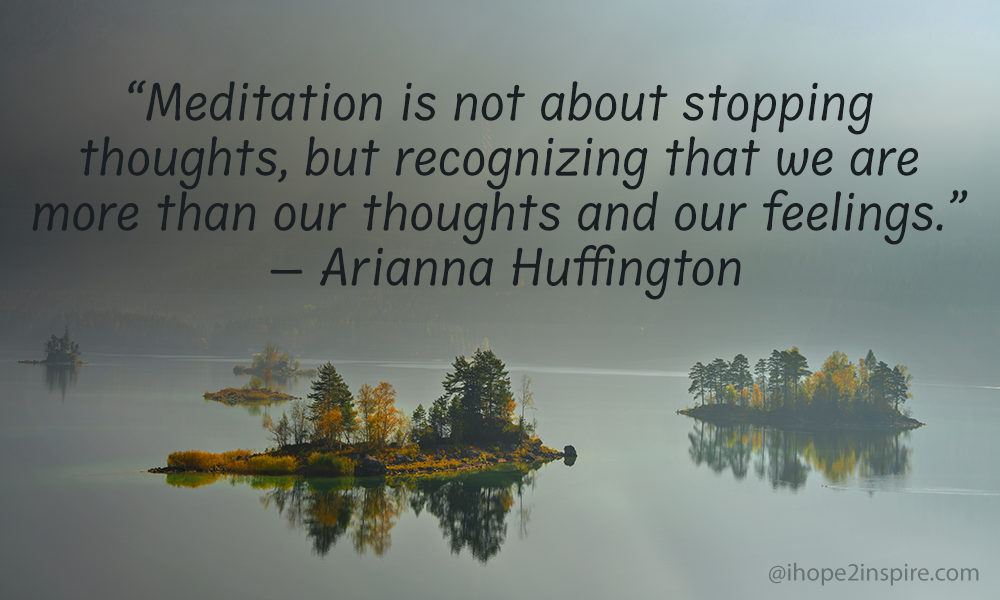
I thought meditation meant that I was supposed to stop thinking.
And if you have ever tried to tell your brain not to think, you probably know exactly how well that works.
A thought appears.
Then another one.
You remember something you forgot to do. You start thinking about a conversation you had yesterday. You worry about something that might happen tomorrow.
And suddenly you realize you haven’t been paying attention to your breath at all.
For a long time, I thought that meant I was failing at meditation.
It doesn’t.
That realization changed meditation for me.
The moment you notice that your mind has wandered is actually an important part of the practice. You notice it, and then gently bring your attention back to your breathing, your body, a sound, or whatever you have chosen as your focus.
And then your mind wanders again.
So you bring it back again.
There is no need to get angry with yourself or decide you’re simply “bad at meditation.”
Even after all these years, my mind still wanders.
The difference is that I no longer expect it not to.
Meditation Is Exercise for Your Mind
Over the years, I’ve come to think of meditation almost like exercise for my brain.
We understand that our bodies need movement. We walk, stretch, exercise, or do whatever works for us to keep our bodies strong.
Our minds need attention too.
Every time I notice that my thoughts have carried me away and consciously bring my attention back to the present, I am practicing.
And just like physical exercise, I don’t think one session changes everything.
It’s the repetition that matters.
Over time, meditation has helped me become more aware of my thoughts and emotions instead of automatically being swept away by every one of them.
That doesn’t mean I never get overwhelmed, worried, angry, or upset. I certainly do.
But sometimes I catch myself earlier.
And that gives me a choice about what I do next.
You Don’t Need Twenty Minutes
I used to think meditation had to be a proper “session.”
Twenty minutes. Quiet room. No interruptions.
But real life doesn’t always cooperate with that.
These days, I would much rather meditate for five minutes than decide I don’t have twenty minutes and do nothing at all.
Even a few conscious breaths can create a pause in a busy day.
If you are completely new to meditation, I actually think starting small can make it easier.
Try five minutes.
Sit somewhere comfortable. You can sit on a chair, on your sofa, on your bed, or wherever you feel at ease.
You don’t need special clothes, a meditation cushion, candles, music, or a perfectly peaceful room.
Just get comfortable.
Close your eyes if that feels good, or simply soften your gaze.
Then notice your breathing.
You don’t have to change it.
Just notice it.
And when your mind wanders, which it probably will, notice that too.
Then gently come back.
That’s enough.
A Simple Way to Come Back to the Present
If focusing only on your breathing feels difficult, use your senses.
Ask yourself:
What can I hear right now?
What can I feel?
What can I smell?
What do I see around me?
You don’t need to analyze any of it. You’re simply giving your attention something that exists right now, rather than following your mind into yesterday or tomorrow.
This is something you can practice almost anywhere.
And sometimes, especially when my thoughts are racing, having something tangible to focus on is much easier than trying to force myself to “stop thinking.”
What Meditation Has and Hasn’t Done for Me
Meditation hasn’t made me immune to stress.
It hasn’t stopped difficult things from happening.
It hasn’t eliminated fear, sadness, anger, sleepless nights, or overthinking from my life.
And I think that’s important to say.
Sometimes we hear about meditation as though enough practice will eventually turn us into permanently peaceful people who calmly accept whatever life throws at us.
That hasn’t been my experience.
What meditation has given me is a tool.
It can help me slow down when my thoughts are racing. It can help me notice when emotions are beginning to take over. It can remind me to breathe before I react. And it can bring me back into the present when my mind is busy worrying about something that hasn’t happened yet.
There is also growing research into how meditation and mindfulness practices may support things such as stress management, attention, emotional well-being, and sleep.
But honestly, after more than twelve years, the reason I continue to meditate isn’t because of a list of potential benefits.
I continue because I know how it feels when my mind is running away with me and I know that sometimes meditation helps me find my way back.
And Sometimes It Just Doesn’t Work
I think this deserves its own section because it isn’t talked about enough.
There are times when I try to meditate and simply cannot find that feeling of calm.
For me, this happens most often at night.
If something is really troubling me and I’m lying awake thinking about it, my thoughts can become incredibly persistent. I can focus on my breathing, try to let the thoughts pass, and remind myself of everything I have learned—and still find myself right back inside the worry.
Twelve years of meditation haven’t made me immune to that.
And strangely enough, accepting this has become part of the practice too.
Sometimes my mind is unsettled.
Sometimes meditation helps tremendously.
Sometimes it helps only a little.
And occasionally, it doesn’t seem to help at all.
That doesn’t erase everything meditation has given me over the years.
It simply means I’m human.
If You Want to Try Meditation
If you’ve never meditated before, don’t make it complicated.
You don’t have to commit to twenty minutes every morning for the rest of your life.
Start with five minutes.
Or even two.
Find somewhere comfortable and bring your attention to your breathing. When your mind wanders, notice it and come back.
That’s it.
And don’t judge the experience by whether you felt wonderfully peaceful afterward.
You may feel calmer.
You may not.
The practice is in noticing.
With time, you may also begin to notice little opportunities for mindfulness outside of meditation, a walk through the woods, sitting quietly with your pet, drinking your morning coffee, standing outside for a moment and feeling the air on your skin.
Those small moments count too.
Twelve Years Later
When I first discovered meditation during those difficult years, I was looking for something to hold on to.
I don’t think I could have imagined then that more than twelve years later it would still be part of my life.
My relationship with meditation has changed.
I don’t need it to make every uncomfortable feeling disappear. I don’t expect my mind to become completely quiet. And I certainly don’t believe there is a perfect way to do it.
Sometimes meditation is sitting quietly and focusing on my breath.
Sometimes it’s stopping in the woods and noticing how beautiful everything around me is.
Sometimes it’s recognizing that I’m about to react emotionally and giving myself a moment before I do.
And sometimes it’s lying awake at night, trying everything I know, and accepting that tonight my mind simply isn’t ready to become quiet.
Maybe that’s what twelve years of meditation have taught me more than anything else.
We can’t always control what life puts in front of us.
We can’t always control the first thought or emotion that appears.
But we can learn to pause.
We can learn to notice.
And again and again, we can practice finding our way back to the present moment.
Sometimes that is enough.